A Landmark Conviction for Yarmouk in Sweden Comes with Lessons
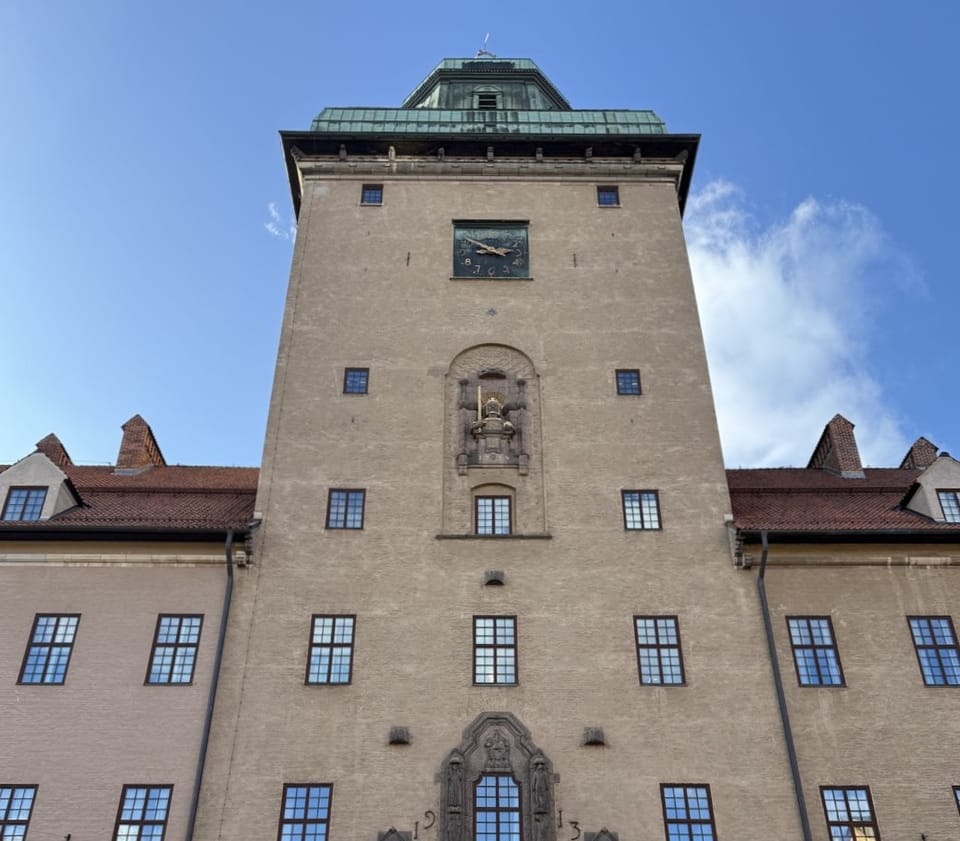
On May 4, 2026, the Solna District Court in Stockholm sentenced Mahmoud S. to life imprisonment for aggravated violations of international law committed in Al-Yarmouk, south of Damascus, in 2012 and 2013. The court found him responsible for participating in the shooting of a peaceful demonstration on July 13, 2012, and for his role at a checkpoint where civilians were identified, detained, and handed over to Syrian security services despite the known risk of torture, severe ill-treatment, and death. The ruling followed a five-month trial spanning 54 hearing days, monitored by SJAC in partnership with the Centre for Victims of Torture and students from Stockholm University. The judgment is significant not only because the court found Mahmoud S. guilty of war crimes in Yarmouk as a first, but because it situates local acts of violence within the broader architecture of mass atrocities in the Yarmouk district and underscores the continuing relevance of universal jurisdiction for Syria-related crimes.
Facts of the Case: From a Peaceful Protest to Checkpoint Abuse
The court’s findings concerned two distinct counts. First, Mahmoud S. was convicted for taking part in an armed attack on a peaceful anti-government demonstration in Yarmouk, in which several civilians were killed or injured, which was connected to a non-international armed conflict (NIAC). Second, he was convicted for his participation in checkpoint operations between December 2012 and July 2013, where civilians were stopped, searched, identified, and transferred to authorities who subjected many of them to torture while others were killed. These findings are legally important because they connect individual participation to a broader pattern of abuse against civilians during the armed conflict in Syria, rather than treating each incident in isolation.
Parallel Proceedings and Cross-Border Investigations
The Mahmoud S. judgment does not stand alone. It unfolds alongside the larger Al-Yarmouk trial in Koblenz, where five accused are being prosecuted for crimes linked to the same area and overlapping periods of violence, namely Jihad A., Mahmoud A., Mazhar J., Sameer S., and Wael S., which started on November 19, 2025. These proceedings demonstrate the practical value of cross-border investigations, victim testimony, and cooperation among prosecutors, police, and civil parties, as they result from close cooperation between Germany and Sweden. They also show the limits of fragmented justice: while in Sweden, Mahmoud S. was not charged with acts concerning systematic human rights violations or other acts connected to the siege, such as alleged starvation, in Koblenz, the accused Mahmoud A. is charged with starvation as a war crime. In the German case, several other war crimes and crimes against humanity are charged, requiring a deeper investigation of the organizational structures behind the alleged crimes. Taken together, the cases help build a more complete judicial and historical record of crimes committed against civilians in Yarmouk.
The Public Nature of Criminal Proceedings
The Mahmoud S. proceedings also raise important questions about how courts balance transparency with witness protection. In Sweden, parts of the testimonies were heard behind closed doors, yet the publicly available judgment contains extensive identifying information that appears only partially redacted. This illustrates that witness-protection practices do not always move in a single direction: a court may restrict public access during hearings while later disclosing substantial detail in its written ruling. By contrast, German courts have generally applied a high threshold for excluding the public in criminal trials, but significantly redact judgments before publication. These differences matter - particularly in such parallel proceedings, where one trial is still ongoing. Public hearings are a core fair trial guarantee and an important mechanism of public accountability, but so too is the protection of victims and witnesses. Parallel proceedings involving overlapping witnesses make those tensions even more visible and call for clearer, more consistent protection standards across jurisdictions.
Universal Jurisdiction in Europe and the Future of Accountability in Syria
The Mahmoud S. judgment comes at a moment when several Syria-related proceedings in Europe are reaching decisive stages. Rather than signaling the end of universal jurisdiction, these cases show its continued necessity. European courts remain among the few venues able to prosecute core international crimes committed during the Syrian conflict with relative independence, procedural safeguards, and meaningful victim participation. They also continue to generate detailed factual records that may serve future accountability efforts elsewhere.
At the same time, accountability efforts inside Syria have begun to take shape and are drawing close attention. These proceedings may play an important transitional role, but they do not yet offer a full substitute for universal jurisdiction cases in Europe. A central limitation remains the legal framework: where domestic proceedings do not charge war crimes, crimes against humanity, or forms of responsibility such as command responsibility, they risk mischaracterizing the scale and character of the underlying violence. Fair labelling is not only crucial for the accused, but for victims and survivors. This is not merely a technicality, but part of recognition of the full scale of the harm.
Whether cases like the Yarmouk proceedings will soon be possible in Syria remains uncertain. What is clear is that delaying a robust transitional justice framework carries real costs. Without a legal basis to prosecute core international crimes and modes of liability that reflect how such crimes are organized and carried out, domestic trials may struggle to capture the full dimensions of atrocity. The result is not only a legal gap, but a gap in historical acknowledgment.
The strongest path forward is not a choice between justice in Europe and justice in Syria, but a more coordinated relationship between them. The Mahmoud S. judgment shows what can be achieved when courts, law enforcement, survivors, and civil society cooperate closely. The next step is to deepen mutual legal assistance, improve protection practices, and ensure that future proceedings—wherever they occur—reflect both the individual harm suffered and the broader systems that enabled those crimes.
___________________________
For more information or to provide feedback, please contact SJAC at [email protected] and follow us on Facebook and Twitter. Subscribe to SJAC’s newsletter for updates on our work