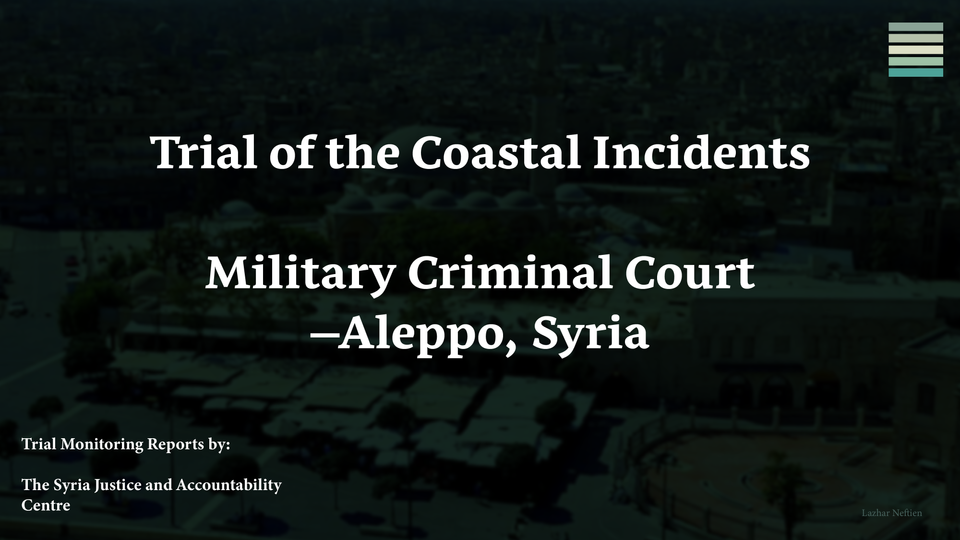
SJAC Begins Monitoring the Coastal Incidents Trial
In November 2025, at the Palace of Justice in Aleppo, the Syrian Prosecutor General opened criminal proceedings related to the large-scale violence that took place in parts of Syria’s coastal provinces in March 2025, during which more than 1,400 people reportedly died and significant destruction occurred.
The opening of this case marks a significant moment in Syria’s accountability landscape. For decades, the Syrian judiciary was defined by its unwillingness or inability to pursue cases involving serious abuses, particularly those linked to state forces or affiliated groups. This case pursues accountability for individuals responsible for post-transition violence from both former pro-government units and members of the new security forces. The case is the first to go to trial for what likely constitute atrocity crimes.
A national investigative commission conducted a months-long inquiry into the March events and forwarded hundreds of suspects’ names to prosecutors. Fourteen defendants appeared during the opening session on November 18, 2025. The charges against them include killings of civilians, attacks on public security personnel, incitement that contributed to sectarian reprisals, looting, and the formation or leadership of armed groups.
On December 18, SJAC’s new trial monitor attended the proceedings, you can view the first public report here. This is the first time that SJAC’s trial monitoring program, which has published monitoring reports on trials of Syrian perpetrators in Europe since 2020, has monitored a trial in Syria. SJAC plans to continue to publish regular monitoring reports, summaries of key hearings, and legal analysis as the trial progresses. In a context where official court records remain limited or inaccessible, SJAC’s monitoring serves to preserve an accurate historical account, support future justice efforts, foster a culture of transparency, and ensure that victims, families, researchers, and the broader public have access to reliable information about the case.
___________________________
For more information or to provide feedback, please contact SJAC at [email protected] and follow us on Facebook and Twitter. Subscribe to SJAC’s newsletter for updates on our work